Diyarbakir & Mesopotamia
City of the Walls and the Tigris
About — Diyarbakir & Mesopotamia
Diyarbakır lies on the River Tigris in south-eastern Türkiye, and its old quarter is still enclosed by long walls of black basalt. Diyarbakır Airport (DIY) is about 2 hours by air from Istanbul and close to the city. Families usually stay inside or just outside the old walls, so the main sights can be reached on foot. One or two days are enough, and Mardin, about 1.5 hours to the south, makes a natural next stop.
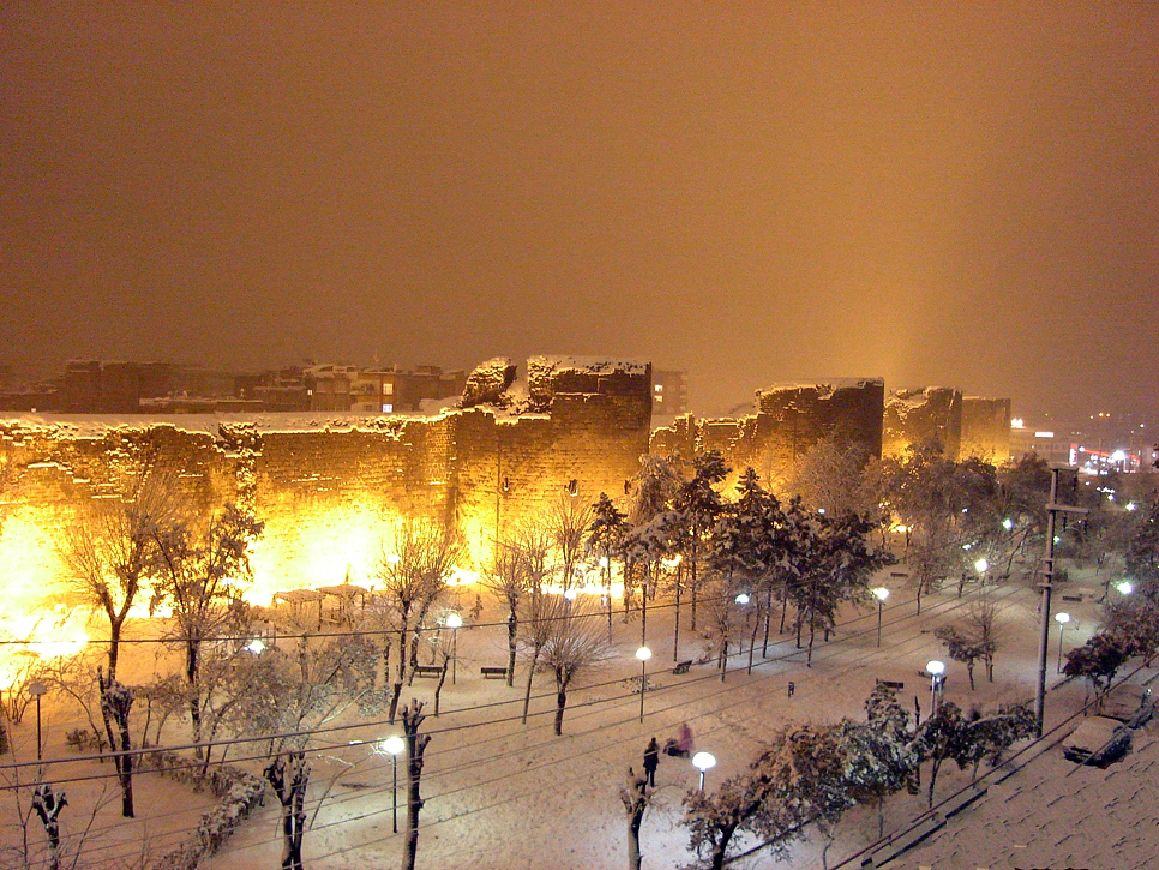
The basalt walls and the Hevsel Gardens that run down from them to the Tigris are together a UNESCO World Heritage Site; the stretch near the Mardin Gate gives the best views over the gardens. The Great Mosque (Ulu Cami), one of the oldest mosques in Anatolia, has a wide courtyard framed by carved stone arcades. South of the city, the 11th-century Ten-Eyed Bridge (On Gözlü Köprü) crosses the Tigris on ten arches and is lovely at sunset. Have breakfast in the courtyard of Hasan Paşa Hanı, an Ottoman caravanserai where cheese, honey, clotted cream and olives are served under the arches, and look into Deliller Hanı, another historic caravanserai near the Mardin Gate. For lunch, try kaburga dolması, lamb ribs stuffed with spiced rice, and meftune, a lamb and vegetable dish with garlic and sumac.
Family tips: summers are very hot, often above 40°C in July and August, so come in spring or autumn and plan walks for the morning and evening. Light, loose clothing that covers shoulders and knees suits both the heat and mosque visits. Halal food is everywhere; also try liver kebab and menengiç coffee, made from wild pistachio. There are many mosques in the old town. Some historic buildings in the region are still being restored after the 2023 earthquake, so your guide will confirm what can be visited. A private vehicle with driver is useful for the bridge, the garden viewpoints and the drive to Mardin.
City Guide — Diyarbakir & Mesopotamia
Diyarbakir (ancient Amida) is one of the largest cities in south-eastern Türkiye; situated on the banks of the River Tigris, it is the second largest city in the South-eastern Anatolia region after Gaziantep. The area around Diyarbakir has been inhabited by humans since the Stone Age; the pre-pottery Neolithic settlement of Cayonu dates to over 10,000 years ago and its excavated remains are on display at the Diyarbakir Museum. The first major civilization to establish itself in what is now Diyarbakir was the Hurrian kingdom of the Mitanni, who made it their military and trade capital; the city was then ruled by a succession of nearly every polity that controlled Upper Mesopotamia, such as the Assyrians, Urartu, Medes, Seleucids and Parthians, and the Roman Empire gained control of the city in 66 BC, when it was named Amida. In 639 the Umayyads arrived and introduced Islam, followed by the Marwanids in the 10th century; after the Battle of Manzikert in 1071 the city came under the rule of the Artuqids and later the Turkic federations of the Kara Koyunlu and Ak Koyunlu. Diyarbakir is surrounded by an almost intact, dramatic set of high walls of black basalt forming a 5.5 km circle around the old city; there are four gates into the old city and 82 watchtowers on the walls, which were built in antiquity and restored and extended by the Roman emperor Constantius in 349, and the walls are considered the second largest city walls in the world after the Great Wall of China. The Great Mosque is one of the city's main monuments. Diyarbakir is known for rich dishes of lamb using spices such as black pepper, sumac and coriander, rice, bulgur and butter; the most famous speciality is Meftune, made of lamb and vegetables laced with garlic and sumac, and another is Kaburga Dolmasi, baked lamb ribs stuffed with rice and spices. The city is also famous for its watermelons, which are exported internationally, and one of its largest events is the annual Watermelon Festival.
Highlights
- Diyarbakir Walls (UNESCO)
- Grand Mosque
- Ten-Eyed Bridge and the Tigris
- Hevsel Gardens
- Kadayif and liver breakfast