Eskisehir
City of Youth and Culture
About — Eskisehir
Eskişehir is a lively, green university city in north-western Anatolia, with trams, riverside cafés and a carefully restored historic quarter. The easiest way to get there is the high-speed train: about 2.5–3.5 hours from Istanbul and about 1.5 hours from Ankara, arriving at a station in the city centre. By road it is around 4 hours from Istanbul. A day trip is possible, but one night lets you enjoy the river in the evening; stay in the centre or near Odunpazarı.
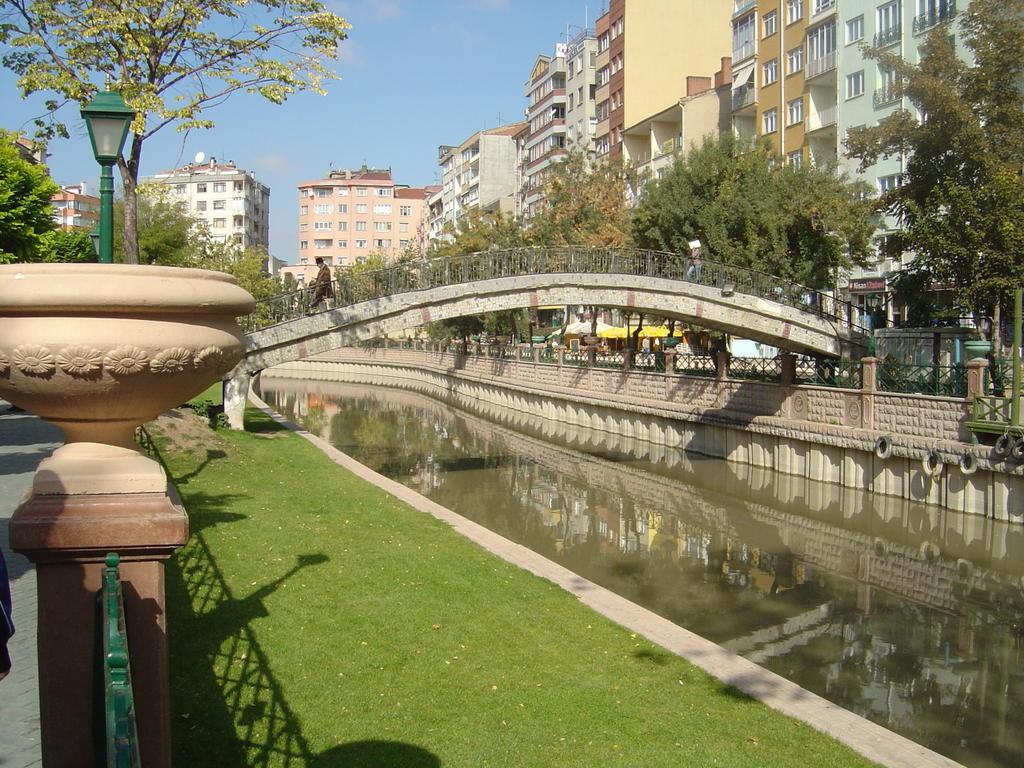
Odunpazarı, the historic quarter, is a hillside of colourful Ottoman timber houses, cobbled lanes and small craft shops; here you can watch meerschaum (lületaşı) being carved into pipes and ornaments in small workshops. Right beside it, the Odunpazarı Modern Museum, a building of stacked timber designed by Kengo Kuma, shows contemporary art. The Kurşunlu Mosque complex, an Ottoman külliye from the early 16th century, is a peaceful stop nearby. In the centre, gondolas and small boats glide along the Porsuk river past cafés and bridges. Sazova Park is the children's favourite, with a fairy-tale castle, a pirate ship and a Japanese garden.
Family tips: spring and autumn are mild and pleasant for walking; summers are hot and dry and winters cold. The city is flat and compact, and the centre is easy to get around by tram, so a pushchair works in most areas, though the old quarter's cobbled lanes are steep in places. Halal food is easy to find: try çibörek, a crisp Crimean Tatar pastry filled with minced meat, and met helvası, a soft white halva. The Kurşunlu Mosque is convenient for prayers in the old quarter. Eskişehir is an easy train stop to add between Istanbul and Ankara or Konya.
City Guide — Eskisehir
Eskisehir (Turkish eski "old", sehir "city"; Latin Dorylaeum) is a city in north-western Türkiye and the capital of Eskisehir Province. The city is located on the banks of the Porsuk River, 792 m above sea level, where it overlooks the fertile Phrygian Valley, and in the nearby hills one can find hot springs. The city is 233 km west of Ankara, 330 km south-east of Istanbul and 78 km north-east of Kutahya. Known as a university town, both Eskisehir Osmangazi University and Anadolu University (which has one of the largest student enrolments in the world) are based in Eskisehir. The name Eskisehir literally means Old City in Turkish; indeed, the city was founded by the Phrygians in around 1000 BC, and many Phrygian artefacts and sculptures can still be found in the city's archaeological museum. There is also a museum of meerschaum stone, whose production remains notable, used to make high-quality meerschaum pipes. Whenever it was mentioned by ancient geographers, the city was described as one of the most beautiful in Anatolia. Christianity arrived after Constantine the Great made it the official religion of the Roman Empire; beginning in the 4th century, records exist of bishops holding office in the city, known as Dorylaeum in that period. The city has a significant population of Crimean Tatars, and it also attracted ethnic Turks emigrating from Balkan countries such as Bulgaria, Romania, Bosnia and the Sandzak region, who contributed to the development of the city's metalworking industries. Most of modern-day Eskisehir was rebuilt after the Turkish War of Independence (1919-1922), but a number of historic buildings remain, such as the Kursunlu Mosque; the archaeological site of the ancient Phrygian city of Dorylaeum is close to Eskisehir, and the city is noted for its natural hot sulphur springs.
Highlights
- Odunpazari historic houses
- Gondola ride on the Porsuk river
- Odunpazari Modern Museum
- Sazova Park fairy-tale castle
- Ciborek and met halva