Malatya
The Capital of Apricots
About — Malatya
Malatya, in eastern Türkiye, is the city of apricot orchards and a gateway to Mount Nemrut. Flights from Istanbul to Malatya Erhac airport (MLX) take about 1 hour 45 minutes, and the airport is around 30 minutes from the centre. The centre was heavily affected by the 2023 earthquakes and is being rebuilt; some sites may be under restoration, and we recommend newly built hotels.
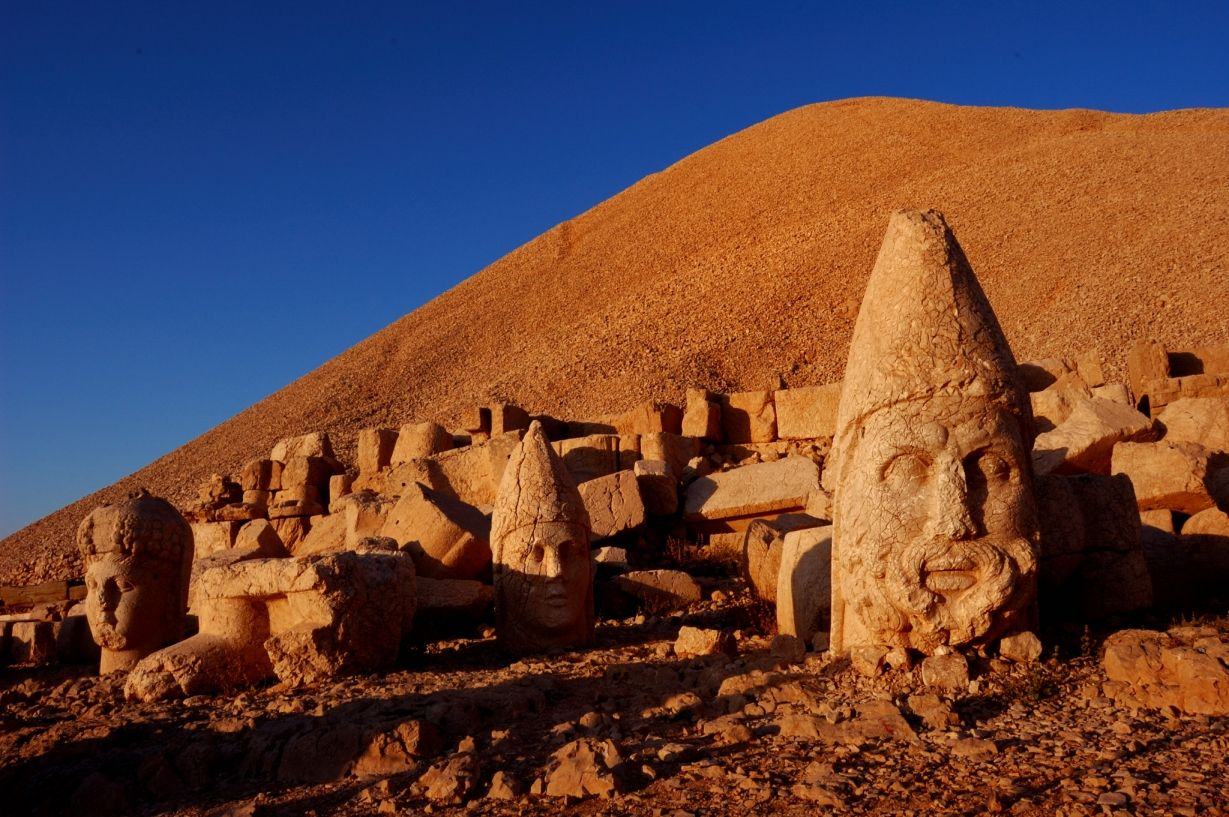
Arslantepe Mound, a UNESCO World Heritage Site just outside the city, shows mud-brick buildings more than 5,000 years old under a protective roof. The apricot bazaar (Kayisi Pazari) sells dried apricots, apricot pestil, apricot chocolates and kernels. In Battalgazi (Old Malatya), the Seljuk-era Great Mosque with its brickwork and turquoise tiles may be partly under restoration. Mount Nemrut can be reached from the Malatya side for sunrise among the giant stone heads of the Commagene kingdom on a summit above 2,100 metres; the drive takes around 2.5–3 hours and ends with a steep walk. Try kagit kebab, lamb and vegetables baked in paper.
Family tips: summers are hot and dry, yet the Nemrut summit is cold at sunrise even in July, so pack jackets; the summit road is usually open only from late spring to autumn. Halal food is the norm and mosques are easy to find. With sights spread out and a very early start for Nemrut, a private vehicle with driver is most comfortable, and one or two nights are enough. Malatya and Nemrut can be added to an Istanbul holiday by domestic flight.
City Guide — Malatya
Malatya is a city in the Eastern Anatolia region of Türkiye and the capital of its eponymous province. The city has been a human settlement for thousands of years: the Assyrians called the city Meliddu; Strabo says that the city was known "to the ancients" as Melitene, a name adopted also by the Romans following Roman expansion into the east. According to Strabo, the inhabitants of Melitene shared at that time with the nearby Cappadocians and Cataonians the same language and culture. The site of ancient Melitene lies a few kilometres from the modern city in what is now the village of Arslantepe and near the dependent district centre of Battalgazi; present-day Battalgazi was the location of the city of Malatya until the 19th century, when a gradual move of the city to the present third location began, and its official name was Eskimalatya (Old Malatya) until recently. Meatballs (kofte) have a special place in the cuisine, as do apricots, which are used in many meals from kebabs to desserts; there are over seventy kinds of kofte, usually made with wheat and other ingredients mixed in, and Kagit Kebabi, a dish of lamb and vegetables broiled in a wrapper of oily paper, is one of the most important local specialities. The Malatya region is best known for its apricot orchards: about 50% of the fresh apricot production and 95% of the dried apricot production in Türkiye, the world's leading apricot producer, is provided by Malatya, and the name of the fruit is synonymous with the city; it reaches its most delicious and sophisticated form in the fertile soil of Malatya, nourished by the alluvial soil of the Euphrates. The Arslantepe Mound was added to the UNESCO World Heritage List in 2021.
Highlights
- Mount Nemrut sunrise (3 hours away)
- Aslantepe Mound (UNESCO)
- Apricot market
- Battalgazi historic bazaar
- Kagit kebab