Van & Eastern Anatolia
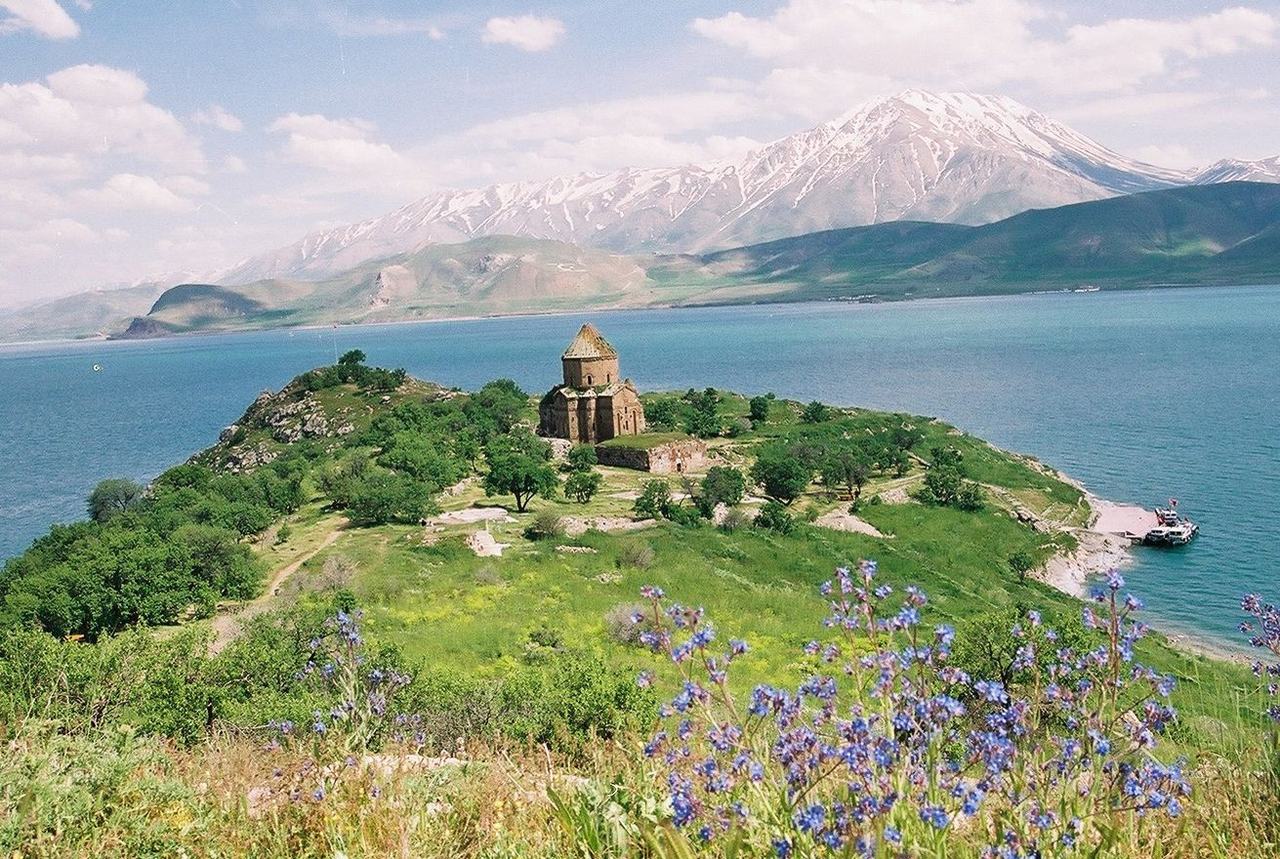
Lake Van and Akdamar
About — Van & Eastern Anatolia
Van lies on the eastern shore of Lake Van, Türkiye's largest lake, at an altitude of about 1,700 metres. Van Ferit Melen Airport (VAN) is about 2 hours by air from Istanbul and close to the city. Families usually stay in the centre, within walking distance of the breakfast salons and the bazaar; two days are enough for the lake, the castle and a drive into the countryside. Lake Van is a soda lake: its water feels slippery, was once used for washing clothes, and only one fish, the pearl mullet, lives in it.
Boats from the pier near Gevaş, about 45 minutes from the city, reach Akdamar Island in about 20 minutes; the 10th-century Akdamar Church is famous for its stone reliefs, and the island is covered in almond blossom in spring. Van Fortress (Tushpa), on a rocky ridge by the lake, is the best place for sunset. Hoşap Castle crowns a rocky hill about an hour to the south-east, and Muradiye Waterfall, with its suspension footbridge, is about an hour to the north-east. Children love the white Van cats, many with eyes of two different colours, at the Van Cat House on the university campus. And no visit is complete without a Van breakfast, with herb cheese, honey and clotted cream, olives and murtuğa served on many small plates.
Family tips: at this altitude evenings are cool even in summer, so pack a warm layer; winters are long, cold and snowy. Halal food is everywhere, and there are mosques throughout the city. Distances between the sights are long, so a private vehicle with driver makes the days comfortable; go to Akdamar early, before the midday sun. Van can be added to an Istanbul holiday with a short domestic flight.
City Guide — Van & Eastern Anatolia
Van is a city in eastern Türkiye located on the eastern shore of Lake Van; the Van central district stretches over 2,289 square kilometres. Archaeological excavations and surveys carried out in Van province indicate that the history of human settlement in this region goes back at least as far as 5000 BC; the Tilkitepe Mound, on the shores of Lake Van a few kilometres south of Van Castle, is the only source of information about the oldest culture of Van. Under the ancient name of Tushpa, Van was the capital of the Urartian kingdom in the 9th century BC; the early settlement was centred on the steep-sided bluff now known as Van Castle (Van Kalesi), close to the edge of Lake Van and a few kilometres west of the modern city, where Urartian cuneiform inscriptions dating to the 8th and 7th centuries BC have been found. The name "Van" comes from the Urartian Biaina. The region came under the control of the Orontids in the 7th century BC and the Persians in the mid 6th century BC; in 331 BC Van was conquered by Alexander the Great and after his death became part of the Seleucid Empire. The Byzantine Empire briefly held the region from 628 to 640, and after the victory of 1071 at Manzikert the entire region fell under Seljuk rule. Today Lake Van, Akdamar Island, Van Castle and the famous Van breakfast are the main attractions for visitors.
Highlights
- Akdamar Island and church
- Sunset at Van Castle
- Van breakfast
- Muradiye Waterfall
- Van Cat House