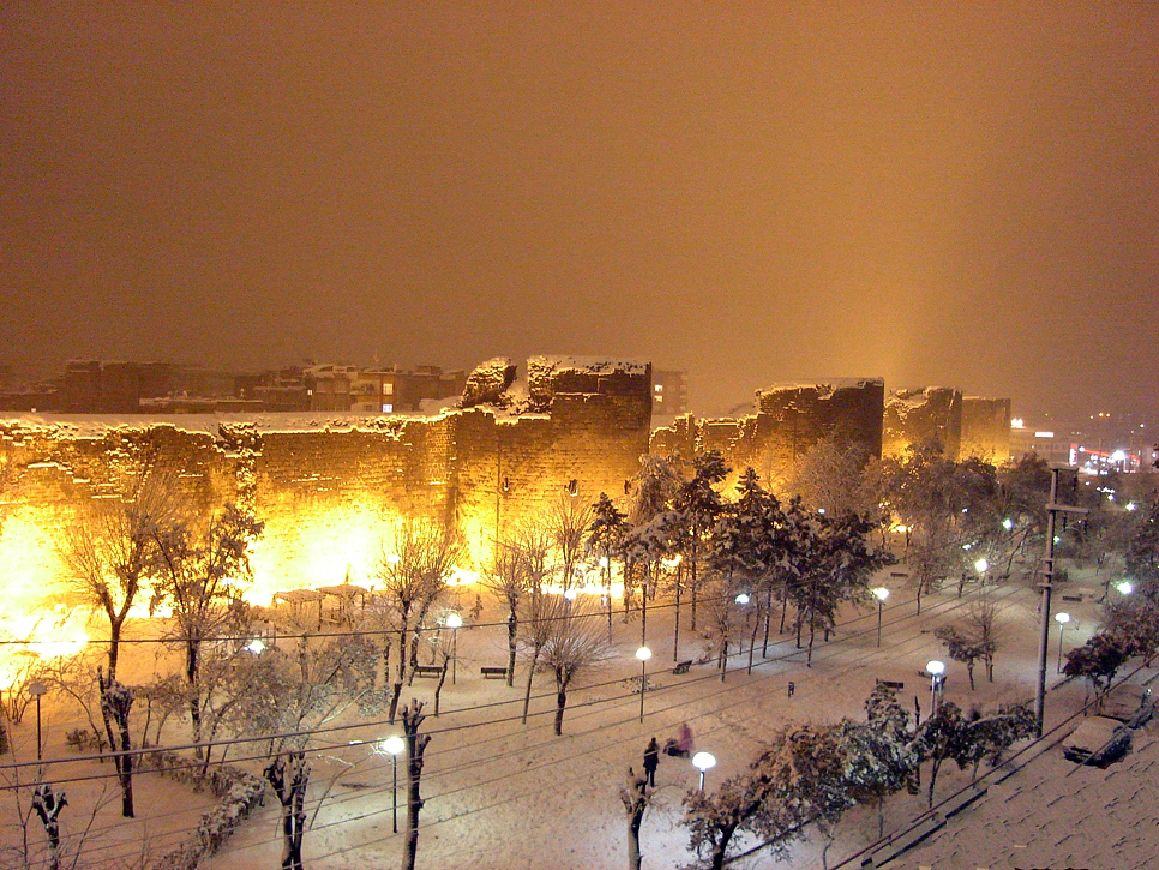
دیاربکر و بینالنهرین
شهر دیوارها و دجله
درباره — دیاربکر و بینالنهرین
دیاربکر در کنار رود دجله در جنوب شرقی ترکیه قرار دارد و شهر قدیمش هنوز با دیوارهای بلند بازالت سیاه احاطه شده است. فرودگاه دیاربکر (DIY) با هواپیما حدود 2 ساعت از استانبول فاصله دارد و به شهر نزدیک است. خانوادهها معمولاً درون دیوارهای قدیمی یا درست بیرون آن اقامت میکنند تا به دیدنیهای اصلی پیاده برسند. یک یا دو روز کافی است و ماردین، در حدود 1.5 ساعت به سمت جنوب، مقصد طبیعی بعدی است.
دیوارهای بازالتی و باغهای هوسل که از پای آنها تا دجله امتداد دارند، با هم در فهرست میراث جهانی یونسکو ثبت شدهاند؛ بخش نزدیک دروازه ماردین بهترین چشمانداز را به باغها دارد. مسجد اولو (مسجد جامع)، از کهنترین مساجد آناتولی، حیاطی گسترده دارد که رواقهای سنگی کندهکاریشده آن را در بر گرفتهاند. در جنوب شهر، پل دهچشمه (اون گوزلو کوپرو) از سده یازدهم با ده طاق از روی دجله میگذرد و هنگام غروب بسیار زیباست. صبحانه را در حیاط کاروانسرای عثمانی حسنپاشا هانی بخورید، جایی که پنیر، عسل، سرشیر و زیتون زیر طاقها سرو میشود، و به دلیلر هانی، کاروانسرای تاریخی دیگری نزدیک دروازه ماردین، سری بزنید. برای ناهار کابورغا دولماسی، دنده بره پرشده با برنج ادویهدار، و مفتونه، خوراک گوشت بره و سبزیجات با سیر و سماق، را امتحان کنید.
نکات خانوادگی: تابستانها بسیار گرم است و در ژوئیه و اوت دما اغلب از 40 درجه بالاتر میرود؛ پس بهار یا پاییز بیایید و پیادهرویها را برای صبح و عصر برنامهریزی کنید. لباس سبک و گشادی که شانهها و زانوها را بپوشاند هم برای گرما و هم برای بازدید از مساجد مناسب است. غذای حلال همهجا هست؛ کباب جگر و قهوه منگیچ را که از پسته وحشی درست میشود نیز بچشید. در شهر قدیم مساجد فراوانی وجود دارد. برخی بناهای تاریخی منطقه هنوز پس از زلزله 2023 در حال مرمتاند، پس راهنمای شما تأیید میکند چه جاهایی قابل بازدید است. خودروی شخصی با راننده برای رفتن به پل، دیدگاههای باغ و جاده ماردین کاربردی است.
City Guide — دیاربکر و بینالنهرین
Diyarbakir (ancient Amida) is one of the largest cities in south-eastern Türkiye; situated on the banks of the River Tigris, it is the second largest city in the South-eastern Anatolia region after Gaziantep. The area around Diyarbakir has been inhabited by humans since the Stone Age; the pre-pottery Neolithic settlement of Cayonu dates to over 10,000 years ago and its excavated remains are on display at the Diyarbakir Museum. The first major civilization to establish itself in what is now Diyarbakir was the Hurrian kingdom of the Mitanni, who made it their military and trade capital; the city was then ruled by a succession of nearly every polity that controlled Upper Mesopotamia, such as the Assyrians, Urartu, Medes, Seleucids and Parthians, and the Roman Empire gained control of the city in 66 BC, when it was named Amida. In 639 the Umayyads arrived and introduced Islam, followed by the Marwanids in the 10th century; after the Battle of Manzikert in 1071 the city came under the rule of the Artuqids and later the Turkic federations of the Kara Koyunlu and Ak Koyunlu. Diyarbakir is surrounded by an almost intact, dramatic set of high walls of black basalt forming a 5.5 km circle around the old city; there are four gates into the old city and 82 watchtowers on the walls, which were built in antiquity and restored and extended by the Roman emperor Constantius in 349, and the walls are considered the second largest city walls in the world after the Great Wall of China. The Great Mosque is one of the city's main monuments. Diyarbakir is known for rich dishes of lamb using spices such as black pepper, sumac and coriander, rice, bulgur and butter; the most famous speciality is Meftune, made of lamb and vegetables laced with garlic and sumac, and another is Kaburga Dolmasi, baked lamb ribs stuffed with rice and spices. The city is also famous for its watermelons, which are exported internationally, and one of its largest events is the annual Watermelon Festival.
نکات برجسته
- دیوارهای دیاربکر (یونسکو)
- مسجد اولو
- پل دهچشمه و دجله
- باغهای هوسل
- صبحانه کادایف و جگر